Tuesday, November 25, 2008
What Are You Doing Hal?
Computer crash has got me posting from random other computers right now. So I haven't gotten my description or photos up from last weeks' dark days challenge. Wish me luck with new hard drive installation and maybe I'll get this week's stuff up! We did eat a great local meal last week though. If I had the time, I'd try to do an all-local Thanksgiving, but falling in the middle of our Robotics team end-of-season madness, I don't think I can pull that one off. Still, the cranberries for sure are coming from Oregon, and my green beans will be from my garden.


Sunday, November 16, 2008
Farmwife Days
 It's no wonder that throughout history, cultures have had enormous celebrations when the fall is winding to a close. There is so much to do in this season of harvest, it can seem overwhelming. Couple that with the fact that our family's schedule is always a little nutty this time of year (due to being involved in the FLL robotics, which schedules its tournaments in December, and with some sort of holiday performance - this year Asa is in a production of Scrooge) and it can be crazy-making. So when I'm not trying to get the kids to various activities, and help them with all of their interests, I'm trying to play farmwife. Clean the chicken coop, bring in the last of the tomatoes before it frosts, make applesauce from all of the windfall apples, try to find screen doors to dry walnuts on, and get the garden beds ready for winter.
 I've got lots of thoughts I'd love to give voice to here, about the recent elections, economic woes, the fact that canning is gaining huge popularity again suddenly, victory gardens, and bicycle advocacy, but very little time to type them out. I guess that will have to wait for the dark days of winter.
Thursday, November 06, 2008
Definitely Try This At Home
This sounds like a great idea. At the Urban Hennery, they've issued a "Dark Days Challenge" to eat locally. From November 15 to March 15:
The “Rules”:
Cook one meal a week featuring at least 90% local ingredients
You define local - the standard definitions range from 100, to 150 to 200 miles
Ingredients can be things you grew and preserved yourself, sourced from local farms and markets, or purchased at the store
Write about the meals you cook, your challenges finding ingredients, why you’re eating local or whatever else strikes your fancy for each recap. Photos are optional.
Include friends and family in your sourcing and eating as possible
More info and sign up at the Urban Hennery
The “Rules”:
Cook one meal a week featuring at least 90% local ingredients
You define local - the standard definitions range from 100, to 150 to 200 miles
Ingredients can be things you grew and preserved yourself, sourced from local farms and markets, or purchased at the store
Write about the meals you cook, your challenges finding ingredients, why you’re eating local or whatever else strikes your fancy for each recap. Photos are optional.
Include friends and family in your sourcing and eating as possible
More info and sign up at the Urban Hennery
Monday, November 03, 2008

Our Very Own Pumpkin Patch

This year for the first time, we got our halloween pumkins from our very own pumpkin patch! In past years, we tried to grow them in the front yard (the deer ate every blossom before it ever fruited) and the back yard (on the North side of the house, not enough sun to ripen once the sun starts dipping to the South). But this year with our new fenced garden to the Southeast of the house, it was just perfect. For more about our adventures picking and carving them, you can see my Blue Skies Blog. But here I just want to exult a little bit in our new garden addition and how well it worked out this year.
 If you've been reading here for awhile, you might remember that two years ago we got ten dumptruck loads of leaves dumped on that spot from our city's leaf collection program, and I spent half the winter raking them out over the garden area. Over the course of a year, they composted down until there was no longer a pile, just some very fertile earth. Then this spring we fenced off the area and it looked like this:
 Then it ended up looking like this, the green beans got so overgrown I had a hard time even taking a photo, and they actually trellised themselves all the way up into the tree that was overhanging the fence, so we had green beans growing 15 feet up the tree. But the bottom line is that this new garden spot ended up being very productive - we harvested about 150 pounds of produce (I did include the pumpkins in that amount) from that front garden area.
We got tons of green beans, which did really well. The peppers flopped there, but did well in our raised beds in the back so that didn't matter too much, and we got a nice amount of tomatoes (but plan on trellising them next year for a better harvest). We also got fresh corn on the cob, lettuce, carrots, and potatoes, cucumbers, and now broccoli, chard, beets, cabbage, and kale. I was picking a bucket like this every couple of days throughout the harvesting season and its still doing well.
Next year's plan is to expand that area to an even bigger size, grow enough tomatoes to can tomatoe sauce, and have a salsa garden, as well as adding some strawberry beds and maybe raspberries. Garden dreams have a way of keeping me going through the winter season, and with this year's success, I'm even more energized for next year.
Thursday, October 23, 2008
DIY Blog Carnival
One of my main interests this winter is learning to do more things for ourselves. Becoming more self-sufficient is not only environmentally-friendly and economically advantageous, but also fun and a great example to our kids, friends, and neighbors that not everything comes pre-packaged from a store. So if you're a blogger and want to submit a "I did this myself" blog post for the Carnival, you can email me at: blueskies19@comcast.net, with "DIY Carnival" in your email title. The more details you can include to help others, the better! Deadline: November 15.
Tuesday, October 14, 2008
Decluttering #1: The Feng Shui of my Kitchen Junk Drawer

I'd like to think that everyone has a Drawer of Hell somewhere in their house. You know, the drawer that you stick every thing that you don't have a place for or you don't know what it goes to. I've tried to confine myself to just one such drawer, but occasionally, like the Kipple that Phillip K. Dick rails about in Do Androids Dream of Electric Sheep? (better known in the film world as Blade Runner), it multiplies.
A quote from the book: "Kipple is useless objects, like junk mail or match folders after you use the last match or gum wrappers or yesterday's homeopape. When nobody's around, kipple reproduces itself ... the entire universe is moving towards a final state of total, absolute kipple-ization."
Total, absolute kipple-ization is about what happened to the only drawer near our telephone in the kitchen. First of all, I have to explain our weird house. It was designed by someone who perhaps never used objects in the same way as most average humans use them. Someone who might, say, never use a pen and paper next to a telephone, because there's almost no room between the only telephone jack on the entire floor and the stove top to put such a thing. But I digress. This is the only drawer in our kitchen that can be used for pens, paper, phone books, etc. But lately it has gotten so kipple-ized that even our phone book wouldn't fit without some shoving of stuff around to make a phone-book-sized hole in the kipple first.
So the Kipple-ized Drawer From Hell was determined to be my first de-cluttering project of the year. I have decided that many parts of this house could use a good decluttering and downsizing of stuff, and the ripping cover of the phone book as the drawer was shutting on it made this one a good place to start. It only took me an hour or two, but the end result was well worth it. Look what I did!

I decided I would post my decluttering updates here on my Urban Farm blog because I think it all relates to simplicity and sustainability. On the one hand, I have my instincts to save and re-use, handed down from my grandmother who lived through the Depression and never ever got rid of any single thing if she could help it. Her legacy of boxes of yarn scraps and old magazine clippings makes me want to run as far as I can in the opposite direction. On the other hand is my husband, who would make a Spartan seem slovenly. If he ever left me, it would be with 10 pairs of underwear and t-shirts, 2 pairs of pants, 2 suits, the baseball from the Little League All-stars game he pitched, and a beer stein from his 4 years living in Germany. That's it. That's all he owns. The rest of the kipple, I mean stuff, is mine.
Between those two warring factions in my brain is me, trying to find the balance between keeping stuff that might become necessary in the future (should we really, as many decluttering gurus suggest, be depending on the fact that whatever we throw away today we can always buy again tomorrow if we need it? How long can the world keep operating like that?), and getting rid of stuff that is only dragging me down and causing my time and mental energy to care for it.
So come with my on my decluttering journey. And if you want, you can join in and send me some pics or links of your own war on kipple.
Monday, October 13, 2008
Bike Envy, Again!

My friend just got one of these bikes, a Rans Fusion, and wow is it fun to ride! I found myself laughing and smiling just toodling around the block on it. It's not quite a recumbent, but comfortable and easy to maneuver around. It's kind of like those chopper-bikes that the cool kids had back in the 70's when I was growing up, and reminds me a little bit of my old Stingray with the cards in the spokes. So yet again, I have bike envy. There's obviously not enough garage space or money in my life to have all the bikes I'd like to have in my stable.
Thursday, October 09, 2008
Home to the Harvest
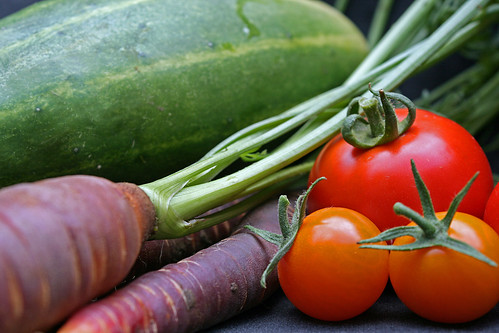
It's hard to believe we've been gone so long. The weather has turned in our absence from summer to fall. Autumn is the hardest time to leave here, partially because it's such a lovely season in Oregon, and partially because leaving the harvest behind feels almost sinful. It was dang hard to walk away from my vegetables! I managed to put about 6 quarts of green beans in my freezer a day or two before we left, and my good friend thankfully threw some of my tomatoes in there for me too in our absence. I still have a bunch of tomatoes and peppers on the vine, plus plums and apples falling off of our trees, so applesauce and dried plums are next on the agenda.
I was really in awe of the gorgeous kitchen gardens in Italy, as well of course as the olive orchards and vineyards. I'll try to post some photos here as I sort through them all. We also had a wonderful time cycling through Italy, a country that really knows how to appreciate their cyclists! You can catch up with my journals and photos from our Italy trip, which I'm posting in installments on my Blue Skies blog.
Tuesday, September 16, 2008
Thursday, September 11, 2008
A Hill of Beans
 I'm not sure why I don't think of myself as a gardener, despite the fact that I can bring in a bucket full of seven pounds of the most amazing produce I've ever tasted. Maybe it's the same reason that although I type away here at my keyboard, and have even written a novel (that has yet to see the light of day on a bookstore shelf), it's hard to call myself a writer. Gardening is what other, better, greener thumbs than I do. I just muddle through, throw some seeds in the ground, try to remember to water them, and hope for the best. Which is really the beauty of vegetable gardening, because really if I can grow something, anyone can. I'm the person who killed a spider plant, which is like the most beginner's household potted plant ever.
 Which brings me to the fact that I'm inordinately pleased with our new vegetable plot. We've got corn, we've got beans, we've got peppers and cucumbers and big orange pumpkins. We've got tomatoes so good that even I, self-professed raw tomato hater (though I love them in sauce) will eat them raw. We've even got potatoes growing where I stuck two already-sprouted potatos from my vegetable bin into the ground with nothing more than a spade and a prayer.
 My beans have outclimbed the string, the fence, and have twined themselves up into the branches of an overhanging maple tree, bearing beans all the way up to the sky. A veritable Bean Highway to Heaven. In fact, I have crossed some kind of invisible boundary of gardening. I am Putting Food Away. I have quart baggies of green beans in my freezer (blanched according to my mom's instructions) for the winter. Not only is my summer produce coming from outside my door, at least some fraction of the wintertimes greens will be too. It's actually a little sad to be leaving, going off on vacation at a time when the garden is showing me her loveliest side. Luckily, my friend's parents are going to be staying in our house, and while I've definitely encouraged them to help themselves to all of the fresh eggs and produce they can eat while they're here, I did ask that they throw any spare tomatoes in the freezer for future sauce-making after we return.
If there's one thing that I hope to leave anyone with who reads about my garden on this blog, it's Hope. Because if I can do this, you can too. Even if it's just one small raised bed, or a couple of containers on a deck, it's that first step that sets your foot on a road to somewhere. And this year, my journey has amounted to a hill of beans (a big one).
Sunday, August 24, 2008
Where the Plastic Meets the Wallet
In relation to my previous post about reducing our plastic consumption, I've been taking a closer look at all of the plastic coming into our house, and immediately saw what our (plastic) achilles heel is: Costco. In a day when food prices are going nuts, we're trying to save on many fronts. Most of those also happen to bring our food closer to home: gardening, having chickens, gleaning, picking fruit locally, relying on local folks for our milk and meat, etc.
But then there are the things that are certainly not at all cheaper to buy locally. Number one on the list would be bread. We've got a couple of wonderful local bakeries that make awesome organic whole-grain breads. The rub? They're over $4.00 a loaf these days, eep! At Costco I can get two loaves of sprouted organic whole-grains bread for about $2.50 a loaf. Which, when you've got a son who eats as much as mine does, and a daughter who just joined the swim team (in addition to dance, horseback riding, karate, and bicycling everywhere), well you go through a lot of bread, so that really adds up. But unfortunately Costco likes to sell things in bulk, which means that you can't just buy one loaf of bread, you have to buy two of them. And they have to wrap them all up in extra plastic so that they're bagged up together, which is pretty irritating but not enough to make me spend $1.50 more for every loaf.
I know, I know. I should make my own. I've tried. A couple of times. The kids have begged me not to try again. I can make white-flour loaves that come out just fine, but whenever I try to add in the nutritional density of my favorite organic loaves, mine just come out...well... dense. And not in the nutritional sense. I'm contemplating a bread machine, but until then it's probably going to be Costco and the extra plastic bags.
Anyone who has a fool-proof seriously nutritious yet fluffy and wonderful tasting bread recipe, feel free to let me know!
But then there are the things that are certainly not at all cheaper to buy locally. Number one on the list would be bread. We've got a couple of wonderful local bakeries that make awesome organic whole-grain breads. The rub? They're over $4.00 a loaf these days, eep! At Costco I can get two loaves of sprouted organic whole-grains bread for about $2.50 a loaf. Which, when you've got a son who eats as much as mine does, and a daughter who just joined the swim team (in addition to dance, horseback riding, karate, and bicycling everywhere), well you go through a lot of bread, so that really adds up. But unfortunately Costco likes to sell things in bulk, which means that you can't just buy one loaf of bread, you have to buy two of them. And they have to wrap them all up in extra plastic so that they're bagged up together, which is pretty irritating but not enough to make me spend $1.50 more for every loaf.
I know, I know. I should make my own. I've tried. A couple of times. The kids have begged me not to try again. I can make white-flour loaves that come out just fine, but whenever I try to add in the nutritional density of my favorite organic loaves, mine just come out...well... dense. And not in the nutritional sense. I'm contemplating a bread machine, but until then it's probably going to be Costco and the extra plastic bags.
Anyone who has a fool-proof seriously nutritious yet fluffy and wonderful tasting bread recipe, feel free to let me know!
Thursday, August 21, 2008
Check Out the Chia Potato!
 When I was a teenager, the first Chia pets were introduced. They were one of the big fads of the eighties, along with giant plastic combs, painter's pants, and pet rocks. So when my neighbor looked like he was growing the world's biggest chia pet in his backyard, I asked him what was up.
 As it turns out, it's a vertical potato cage, built similarly to this one. The idea is to build a big circular cage, fill it with compost and dirt, and grow potatos vertically in a small fraction of the space needed to grow them in rows. According to Fred's Garden Gate, you can grow half a bushel a for a horizontal foot.
I'm hoping that maybe it also works with yams, since we don't really eat many potatoes. I'll let you know how my neighbor's Chia harvest goes!
Tuesday, August 12, 2008
The New Plastic Surgery: Excising the Plastic From Our Lives
Chris Jeavans, a U.K. mom is trying to go an entire month with no new plastic things of any kind. A very worthy endeavor, and I'm sure it's surprisingly hard to do completely and thoroughly (her blog today is about brushing her teeth with boar's bristles, quite entertaining). It seems that plastic is endemic in our lives these days, and the amount of plastics that are ending up in our oceans and environment is truly horrifying. As the article says "The UN Environment Programme estimates that there are 46,000 pieces of plastic litter floating in every square mile of ocean on Earth." That's just tragic.
So while I don't think I'm ready to try and live completely without plastic, we have been signifigantly reducing our plastic intake and output over the last few years until it is relatively low. Once one thing has been eliminated, I usually try and target something else to find a non-plastic replacement for (Legos notwithstanding).
 So I thought I'd go through our own recycling and pull out everything plastic for perusal, and this is what I came up with from our 2-weeks of recycling and garbage. In addition to this, there were some "foil" YuGiOh card wrappers that I suspect had plastic in them, and a few odd tofu dog packages and cheese shrinkwrap that I didn't fish out of the garbage, but this is basically it for our plastic consumption for two weeks: three Odwalla bottles, the YuGiOh card deck packaging, a fig bar tray, and two plastic tubs, one was romano cheese and the other some little cookie thingies that we bought for our running relay team.
Here's some ways that we've been cutting back or substituting other things for plastics, in case it is useful to anyone hoping to cut back on their own plastic usage:
- We get milk in glass bottles from a local farmer. Even before we had a direct connection, we were able to buy cow's milk both here and in Washington in glass bottles with a deposit.
- Eggs from our own chickens, we re-use other people's egg cartons.
- Our meat comes from a local source, we buy 1/4 cow and 1/3 pig at a time. All the meat is frozen and wrapped in paper. No plastic-wrapped styrofoam meat trays.
- Hubby makes his own mochas at home (pretty much a cost-saving measure for him over Starbucks, but it has the other effect of cutting down on plastic coffee cups).
- We don't buy bottled water. We refill our reusable water bottles from the water filter on our tap.
- I use cloth bags for carrying groceries. After years of forgetting my canvas bags at home, I bought a half-dozen Chico-bags which stuff into tiny little stuff sacks and clip via carabiner onto purse straps or backpacks. I'm never without a bag anymore, these things are the greatest! If you don't like this style, Reusablebags.com has dozens of different kinds of reusable bags and bottles. According to the EPA, over 380 billion plastic bags, sacks and wraps are consumed in the U.S. each year, simply a staggering number. Just reducing this one usage of plastic would be such a great step.
One thing it took me awhile to figure out was that I could also use these Chico bags for every other store, not just the grocery store. The pharmacy or book store or wherever I was shopping, I just had to be quick enough that they hadn't already started bagging my stuff in plastic. So now I get very very few plastic bags. I had to borrow some from a neighbor one day when I needed them for a project.
- We wash and re-use ziploc sandwich baggies, and also re-use bread bags or any other plastic bags that we do end up with. They get lots of life at least before they go off to a landfill.
- Each year, more and more of our fruits and vegetables are coming from our own gardens and trees. That eliminates produce bags and any wrapping that comes on trucked-in produce as well as those awful clamshell thingies that they package supermarket strawberries and other fruits in. What we don't grow, we try to pick or buy locally as much as possible.
- We don't buy wipes, napkins, paper towels, swiffers, etc. Our kids used cloth diapers. We buy laundry soap in big cardboard boxes, toilet paper that's not shrink-wrapped, etc. etc. etc.
By eliminating many plastics, we tend to buy more locally, pouring more money into our local economy and less into fuel-sucking trucks to ship in plastic-packed produce, meats, eggs, milk, and other stuff from far locations. It's a win-win on so many different fronts, that it's worthwhile to even just pick one thing and try to eliminate that plastic source.
Looking at all of this, it's surprising how far we've come. Most of these steps came gradually over time. Like buying a few cloth napkins at Goodwill, then accumulating a few more and a few more until we reached the critical mass where we no longer needed to keep other napkins in the house. Same with cloth grocery bags or other items. Some things took awhile to get into place, like the gardens, chickens, and local sources for meat and milk. Other stuff is relatively easy and enjoyable, like shopping at the local farmer's market. I have many more things in my sights, like I just started making my own yogurt, since yogurt containers are an endemic source of plastic. Little by little, we're getting there. I'm not ready for that boar-bristle toothbrush just yet though.
So while I don't think I'm ready to try and live completely without plastic, we have been signifigantly reducing our plastic intake and output over the last few years until it is relatively low. Once one thing has been eliminated, I usually try and target something else to find a non-plastic replacement for (Legos notwithstanding).
 So I thought I'd go through our own recycling and pull out everything plastic for perusal, and this is what I came up with from our 2-weeks of recycling and garbage. In addition to this, there were some "foil" YuGiOh card wrappers that I suspect had plastic in them, and a few odd tofu dog packages and cheese shrinkwrap that I didn't fish out of the garbage, but this is basically it for our plastic consumption for two weeks: three Odwalla bottles, the YuGiOh card deck packaging, a fig bar tray, and two plastic tubs, one was romano cheese and the other some little cookie thingies that we bought for our running relay team.
Here's some ways that we've been cutting back or substituting other things for plastics, in case it is useful to anyone hoping to cut back on their own plastic usage:
- We get milk in glass bottles from a local farmer. Even before we had a direct connection, we were able to buy cow's milk both here and in Washington in glass bottles with a deposit.
- Eggs from our own chickens, we re-use other people's egg cartons.
- Our meat comes from a local source, we buy 1/4 cow and 1/3 pig at a time. All the meat is frozen and wrapped in paper. No plastic-wrapped styrofoam meat trays.
- Hubby makes his own mochas at home (pretty much a cost-saving measure for him over Starbucks, but it has the other effect of cutting down on plastic coffee cups).
- We don't buy bottled water. We refill our reusable water bottles from the water filter on our tap.
- I use cloth bags for carrying groceries. After years of forgetting my canvas bags at home, I bought a half-dozen Chico-bags which stuff into tiny little stuff sacks and clip via carabiner onto purse straps or backpacks. I'm never without a bag anymore, these things are the greatest! If you don't like this style, Reusablebags.com has dozens of different kinds of reusable bags and bottles. According to the EPA, over 380 billion plastic bags, sacks and wraps are consumed in the U.S. each year, simply a staggering number. Just reducing this one usage of plastic would be such a great step.
One thing it took me awhile to figure out was that I could also use these Chico bags for every other store, not just the grocery store. The pharmacy or book store or wherever I was shopping, I just had to be quick enough that they hadn't already started bagging my stuff in plastic. So now I get very very few plastic bags. I had to borrow some from a neighbor one day when I needed them for a project.
- We wash and re-use ziploc sandwich baggies, and also re-use bread bags or any other plastic bags that we do end up with. They get lots of life at least before they go off to a landfill.
- Each year, more and more of our fruits and vegetables are coming from our own gardens and trees. That eliminates produce bags and any wrapping that comes on trucked-in produce as well as those awful clamshell thingies that they package supermarket strawberries and other fruits in. What we don't grow, we try to pick or buy locally as much as possible.
- We don't buy wipes, napkins, paper towels, swiffers, etc. Our kids used cloth diapers. We buy laundry soap in big cardboard boxes, toilet paper that's not shrink-wrapped, etc. etc. etc.
By eliminating many plastics, we tend to buy more locally, pouring more money into our local economy and less into fuel-sucking trucks to ship in plastic-packed produce, meats, eggs, milk, and other stuff from far locations. It's a win-win on so many different fronts, that it's worthwhile to even just pick one thing and try to eliminate that plastic source.
Looking at all of this, it's surprising how far we've come. Most of these steps came gradually over time. Like buying a few cloth napkins at Goodwill, then accumulating a few more and a few more until we reached the critical mass where we no longer needed to keep other napkins in the house. Same with cloth grocery bags or other items. Some things took awhile to get into place, like the gardens, chickens, and local sources for meat and milk. Other stuff is relatively easy and enjoyable, like shopping at the local farmer's market. I have many more things in my sights, like I just started making my own yogurt, since yogurt containers are an endemic source of plastic. Little by little, we're getting there. I'm not ready for that boar-bristle toothbrush just yet though.
Friday, August 08, 2008
One Way to Eat Local in the Winter

We drove up to our favorite organic blueberry farm along the McKenzie river yesterday, with kids and/or parents from two other families in my car. I had also taken orders for flats of blueberries from two other friends. We picked for about two hours with the kids, and came home with over 25 pounds of blueberries for our family. I also bought a flat, and I'll put them in ziploc baggies and freeze what we can't eat in the next couple of days. This winter, we can eat our local blueberries (and strawberries, and cherries and blackberries and dried apples and plums) instead of eating fruit grown and trucked up from South America or New Zealand.
 I'm glad that my kids not only got to have a great time yesterday (we also visited their favorite fish hatchery for a picnic, and the blueberry farm has a big rope swing and lots of kids running around) but that they are connected to the seasons, to actually manually picking their own food, and to the people who run the farm that we always go to. Building relationships with growers and with the land is an important part of the cycle that starts when you try to eat more locally.
I'm about to go and blanch some green beans from our garden as well. This year I planted four varieties, two bush beans, scarlet runners, and blue lakes. We should have lots for the winter!
Thursday, August 07, 2008
A Bike Ride I Wish I Was Doing
For those of you bicycle lovers interested in climate change, check out The Climate Ride from New York to D.C. Doesn't that look like fun in a meaningful way???
Wednesday, July 30, 2008
Ghostly Reminders

A Ghost Bike has been placed at the site of the fatal bicycle crash here in Eugene that killed David Minor. The bike is surrounded by flowers and hung with photos and messages. The ghost bike program draws attention to the place where a fatal car-bike collision has occurred, thus hopefully keeping it in the consciousness of the drivers and cyclists who move past that spot on a daily basis. They also remind us of the humans whose lives ended on that particular spot, that they were more than just a blurb in the daily newspaper, but a person with a life and history, friends and family.
When I saw my first ghost bikes, outside of Forest Grove, Oregon where I had gone for a triathlon, I had no idea what they were. I pulled over and read the signs, discovering that in that particular location in May of 2006 Darrel and Sheryl McDaniel, a retired couple from Hillsboro, were killed when a motorist drifted onto the shoulder of the road and struck them. If I never have to see another new Ghost Bike, it would be a good thing. As more and more cyclists take to the roads (I recently read that it's approaching a 100% increase in cyclists nationwide), we can only hope that there will be an increase in safety as well. I have talked to more people recently who started riding their bikes again, and I think that can only increase their awareness of bikes on the roads when they themselves are riding. On the other hand, I've also been hearing around the bicycling grapevine that aggression from motorists towards cyclists is up, possibly because of the large numbers of cycling newcomers and possibly because of general frustration and tension from high gas prices. Probably us cyclists will experience a little of both - increased awareness and increased tensions, so more than ever I am alert when I'm out there biking somewhere.
Wednesday, July 23, 2008
A Day in My Life
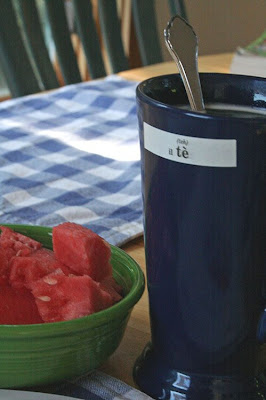 This is one of those rare blog posts that goes on all three of my blogs. This one's relevant to all because it's just a snapshot of my everyday existence. On a parenting list I'm on, we did this last year too: we each took photos throughout an entire day, and that way you get to see the average day in each person's life - what their dinner plates look like and where they go and what kind of slippers they wear, that kind of thing. So if you want to see all the nitty gritty of my life, you can check out A Day in My Life, 2008. And if you're really all that interested, my Day from 2007 is also still up. I found the similarities between the two of them a bit eerie. I have some routines that are pretty engraved in stone. I drink from the same tea mug, hang my laundry out at the same time, and make pizza for the kids once a week. But many things are different, too. The freaky snake in the high chair has been replaced by a cuddly teddy, that's a big improvement at least.
Tuesday, July 22, 2008
Worming Their Way In

So, there's not many things in life better than picking ripe black-red cherries right off the tree and popping them into your mouth, still warm from the sunshine. For years, our neighbors have let us pick off of their massive and abundant cherry tree, and it has become something to look forward to in the early weeks of the summer as we watch the cherries ripen.
Last year, the house was sold and the new owners had the tree trimmed right in the middle of summer, by just a gardener who obviously knew nothing about tree trimming. I thought at the time that the outcome was probably not going to be good. For one thing, the tree looked leggier after the trimming, and it wasn't a good shape, especially for a fruit tree. For another, the season for trimming is not while the sap is running strong during the fruit-bearing season.
 Sure enough, this year the damage has appeared. Unpleasantly, we only discovered after eating many cherries from the tree (eewwwwww!) that nearly all of them have worms. So cherry processing this year took a lot more time and energy as I had to pit each cherry and remove worms instead of just using the cherry pitter on them. Also sadly, the tree only produced about a third of what it usually does. Now of course it's not our tree, so I'm definitely not looking a gift horse in the mouth here. But it's sad when something that has been a regular producer not just for the owners but for several families in the neighborhood is mangled just via someone's non-knowledge of managing a fruit-bearing tree. Several other fruit trees in the neighborhood underwent a similar fate this summer as owners with no knowledge of proper pruning and maintenance hacked away at them. As food prices grow, one can only hope that people begin to appreciate and cherish the treasure that a good producing fruit tree can be!
Wednesday, July 09, 2008
Things My Kids Must Never Ever See
 My kids do not need to know that someone out there on the internet makes and sells chicken diapers. As it is, I have to tell Asa all the time that kissing chickens is a bad idea, and I have to discourage the friendlier ones from just inviting themselves into the house. We would soon have ten more housepets (on top of the four cats and two guinea pigs) if the kids could manage to get chicken diapers on our chickens. Then again, if they actually had to clean the chicken diapers, it might not be such an exciting proposition!
There is actually a lady in the movie Natural History of the Chicken (highly recommended by our chicken loving family) that keeps her chicken as a pet, even going so far as to take it in her swimming pool and to the store! She is obviously a proponent of chicken diapers, LOL.
Subscribe to:
Posts (Atom)


